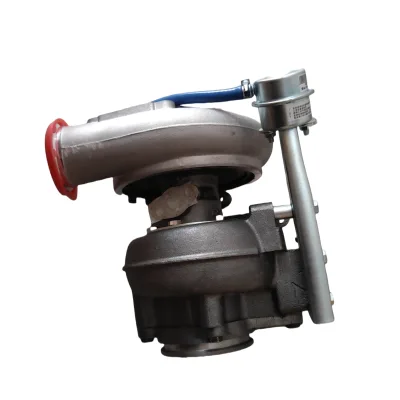
Source diesel marine turbocharger for Ships, Boats, and Generators
Find 30 verified listings for the diesel marine turbocharger to compare specifications like cooling methods, cylinder arrangements, and aspiration types. Buyers can evaluate options for land, marine, and trailer applications from Chinese manufacturers.
Key considerations
Products List




Comprehensive Sourcing Guide
Strategic Sourcing Guide for Diesel Marine Turbocharger Components
Navigating the procurement landscape for diesel marine turbocharger components requires a rigorous approach that distinguishes between verified product attributes and general market observations. The core keyword "diesel marine turbocharger" sits at the intersection of high-performance engineering and critical maritime safety standards. Buyers must carefully analyze the specific configuration of the engine, the aspiration method, and the cooling requirements to ensure compatibility. The following guide outlines the essential factors for sourcing these components, grounded in the observable facts of the current market supply chain.
Technical Configuration and Engine Compatibility
The foundation of a successful procurement strategy lies in matching the turbocharger to the specific engine architecture. In the marine diesel sector, the configuration is rarely generic. Data indicates a prevalence of four-stroke, reciprocating piston engines that utilize compression-ignition modes. The cylinder arrangement often follows an "L" form, which is a specific vertical in-liner configuration common in heavy-duty applications. When sourcing a turbocharger, the buyer must verify the intake pressure impulse. The market presents a dichotomy between naturally aspirated units and supercharged or turbocharged variants. For high-performance marine applications, the turbocharged or supercharged configuration is typically required to maintain power output at altitude or under heavy load.
Cooling mechanisms are equally critical. The supplied data highlights "Water-Cooled" and "Water Cooling" as standard attributes for these units. This necessitates that the turbocharger assembly includes integrated cooling jackets compatible with the vessel's central cooling system. The piston movement is strictly reciprocating, and the combustion type is direct injection, which influences the exhaust gas temperature and flow characteristics the turbocharger must handle. Furthermore, the engine type is often identified by specific model series, such as the Nta855, Kta19, or Kta38, which dictates the physical mounting flanges and shaft dimensions. Buyers should not assume universal fitment; the "Vertical in-Liner, 4 Stroke" specification suggests a specific orientation that must align with the turbocharger's inlet and outlet ports.
Compliance, Certification, and Standard Verification
In the marine industry, regulatory compliance is non-negotiable. The supply chain for these components frequently cites adherence to CE and ISO standards. While specific numerical standard codes like "1500*1000" or "10kg" appear in product listings, these often refer to packaging dimensions or weight rather than engineering performance standards. Buyers must verify that the "CE" marking corresponds to the relevant European directives for machinery and pressure equipment, and that "ISO" certification covers quality management systems (such as ISO 9001) rather than arbitrary product dimensions.
Additionally, the origin of the component plays a significant role in compliance. A substantial portion of the market originates from China, with specific manufacturing hubs noted in regions like Shandongweifang. When sourcing from these locations, the buyer must ensure that the supplier provides valid documentation proving the component meets the flag state regulations of the vessel's registry. The presence of "Standard Component" status in product descriptions suggests that the part is an off-the-shelf replacement, but this does not automatically guarantee marine-grade durability. The "TSMaterial:Iron" note indicates the primary material composition, which must be verified against corrosion resistance requirements for saltwater environments.
Cost Drivers and Pricing Dynamics
Understanding the cost structure of diesel marine turbochargers is essential for budgeting. The observed price range in the market is extremely broad, spanning from $1 to $999,999. This variance is not indicative of quality alone but reflects the diversity of the product catalog, which includes everything from small auxiliary components to complete engine assemblies or high-end superalloy casting parts. The "713&718 Superalloy Nickel-Based Casting Turbojet T" specification suggests that high-temperature resistant materials significantly drive up costs. Buyers should be wary of prices that seem too low for a complete turbocharger unit, as they may represent only a sub-assembly or a generic aftermarket part lacking marine-grade specifications.
Other cost drivers include the customization level and the warranty period. While "Customization" is listed as available, bespoke engineering adds to the unit price and lead time. The warranty terms vary significantly, with some listings offering one year and others only 3-6 months. A longer warranty period often correlates with higher manufacturing quality and more rigorous testing, serving as a proxy for value. The "Condition: New" attribute is standard, but buyers must confirm that "New" implies factory-fresh rather than refurbished, as the latter carries different cost and risk profiles.
Typical Applications and Operational Environments
The versatility of these components is evident in their listed conditions of use. While the core keyword is "marine," the data indicates that these engines and their associated turbochargers are also utilized in land-based, trailer-type, and car-type applications. This cross-industry usage suggests a robust design, but it also requires the buyer to specify the exact operational environment. For marine use, the component must withstand vibration, humidity, and salt spray. The "Generator Type: Diesel Generator" and "Usage: Common Units, Standby Unit, Emergency Crew" tags highlight that these components are critical for power generation in emergency scenarios.
The "Portable" installation method suggests that some units are designed for temporary or mobile setups, which may require different mounting and vibration isolation compared to permanently installed shipboard engines. The "Wooden Case" or "Plywood Package" packing methods are standard for protecting these heavy, precision-engineered units during transit, but the buyer must ensure the packaging is suitable for long-term sea freight to prevent moisture damage. The "Aftermarket" quality designation indicates that these parts are often replacements for original equipment, requiring careful verification of fitment against the specific vessel's engine model.
Supplier Evaluation and Origin Analysis
Evaluating suppliers requires a focus on their ability to provide consistent quality and accurate technical data. The market shows a concentration of suppliers in China, specifically in the Shandongweifang region. While this region is a known manufacturing hub, buyers must conduct due diligence to distinguish between original manufacturers and trading companies. The "Quality: High Quality" and "Quality: Aftermarket" attributes are subjective claims that must be validated through third-party testing or proven track records.
Suppliers should be able to provide detailed technical drawings, material certificates, and proof of compliance with the stated standards (CE, ISO). The "Standard Component" status implies that the supplier should have a reliable supply chain for spare parts. Buyers should also verify the "Lead Time" and "MOQ" (Minimum Order Quantity), which are observed to range from 1 to 20 units. A supplier offering an MOQ of 1 is suitable for emergency replacements, while bulk orders may require negotiation on pricing and delivery schedules. The "Packing: Wooden Case" and "Packing: Carton" options indicate flexibility, but the buyer must specify the required packaging to ensure the component arrives undamaged.
Quality Control and Long-Term Procurement Considerations
Quality control is paramount when sourcing critical marine components. The "Warranty" periods of 1 year or 3-6 months provide a baseline for expected performance, but buyers should look for additional quality assurances. The "Casting" technics mentioned in the data suggest that the manufacturing process involves molten metal forming, which requires strict control over cooling rates and alloy composition to prevent defects. The "Iron" material composition must be verified for its specific grade and heat treatment to ensure it can withstand the thermal stresses of a diesel engine.
Long-term procurement considerations include the availability of spare parts and the lifecycle of the component. The "Engine: 4 Stroke" and "Cylinders: Engine:4 Stroke" specifications confirm the engine type, but the buyer must ensure that the turbocharger is compatible with the specific cylinder count and displacement. The "Product Name: Genuine Water Cooling Marine Diesel Engine" suggests that some listings may be for complete engines rather than just turbochargers, so clarity in the order description is essential. Finally, the "Conditions of Use" must be strictly adhered to; a component rated for "Land Use" may not be suitable for the harsh marine environment without additional protective measures. Buyers should establish a long-term relationship with suppliers who can provide consistent quality, technical support, and timely delivery to minimize downtime in critical marine operations.
Summary of Key Sourcing Parameters
To facilitate a streamlined procurement process, buyers should reference the following summary of verified attributes and verification points when evaluating potential suppliers.
| Parameter | Observed Market Attribute | Verification Requirement |
|---|---|---|
| Engine Type | Diesel Engine, 4 Stroke | Confirm "Vertical in-Liner" and "Reciprocating" specs. |
| Aspiration | Turbocharged, Supercharged | Verify "Intake Pressure Impulse" matches vessel needs. |
| Cooling | Water-Cooled | Ensure compatibility with vessel cooling system. |
| Standards | CE, ISO | Request specific standard certificates, not just logos. |
| Origin | China (Shandongweifang) | Verify factory location and export compliance. |
| Material | Iron, Superalloy Nickel-Based | Confirm material grade for corrosion/heat resistance. |
| Packing | Wooden Case, Plywood, Carton | Specify packaging for sea freight protection. |
| Warranty | 1 Year, 3-6 Months | Clarify terms and coverage scope. |
By adhering to these guidelines and rigorously checking the provided facts against specific vessel requirements, buyers can mitigate risks and secure reliable diesel marine turbocharger components that ensure operational safety and efficiency.
FAQs
What engine types are compatible with these turbochargers?
These turbochargers are compatible with four-stroke diesel engines featuring reciprocating piston movement. Specific models include the Nta855, Kta19, and Kta38 series, which utilize vertical in-liner configurations for heavy-duty marine applications.
How are these units cooled during operation?
The units utilize water cooling systems to manage heat effectively. This water-cooled design ensures compatibility with the vessel's central cooling system, which is essential for maintaining performance in high-load marine environments.
Which certifications do the products meet?
Products typically meet CE and ISO standards for quality and safety. Buyers should verify specific certificates to ensure compliance with flag state regulations, as these marks indicate adherence to recognized international engineering and quality management protocols.
Can I find customized options for specific needs?
Customization is available for buyers requiring specific configurations. This allows for tailored solutions regarding dimensions or materials, though bespoke engineering may impact the unit price and lead time compared to standard aftermarket components.
What is the typical warranty period for these engines?
Warranty periods vary between three to six months or up to one year depending on the supplier. A longer warranty often correlates with higher manufacturing quality, serving as a proxy for value when selecting between different product listings.
How are these components packed for shipping?
Components are typically packed in wooden cases, plywood packages, or cartons to ensure protection. This robust packaging is standard for sea freight, preventing moisture damage and physical impact during transit from manufacturing hubs to the destination.